
What’s new for developers
Google has started rolling out Gemini 3 Flash to developers, positioning it as a production-ready model that combines frontier-level reasoning with low latency and materially lower cost than larger models in the Gemini 3 family. The announcement highlights improved multimodal, coding, and agentic capabilities—plus higher rate limits—aimed at rapid iteration and scaled deployment.
Performance and efficiency highlights
In the announcement, Google frames Gemini 3 Flash as “frontier intelligence built for speed,” emphasizing benchmark performance on reasoning/knowledge tasks and strong efficiency versus prior generations and competing baselines.
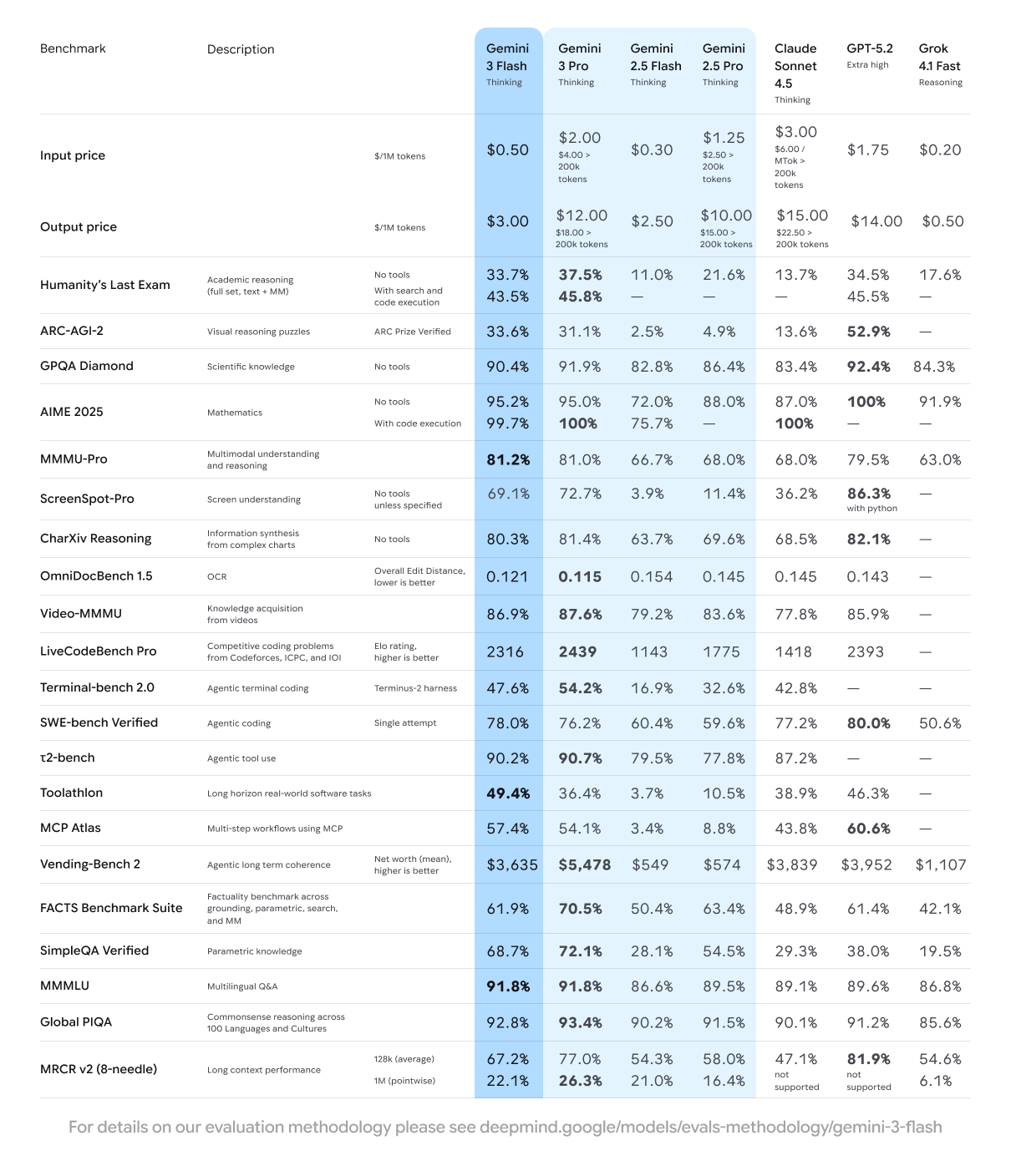
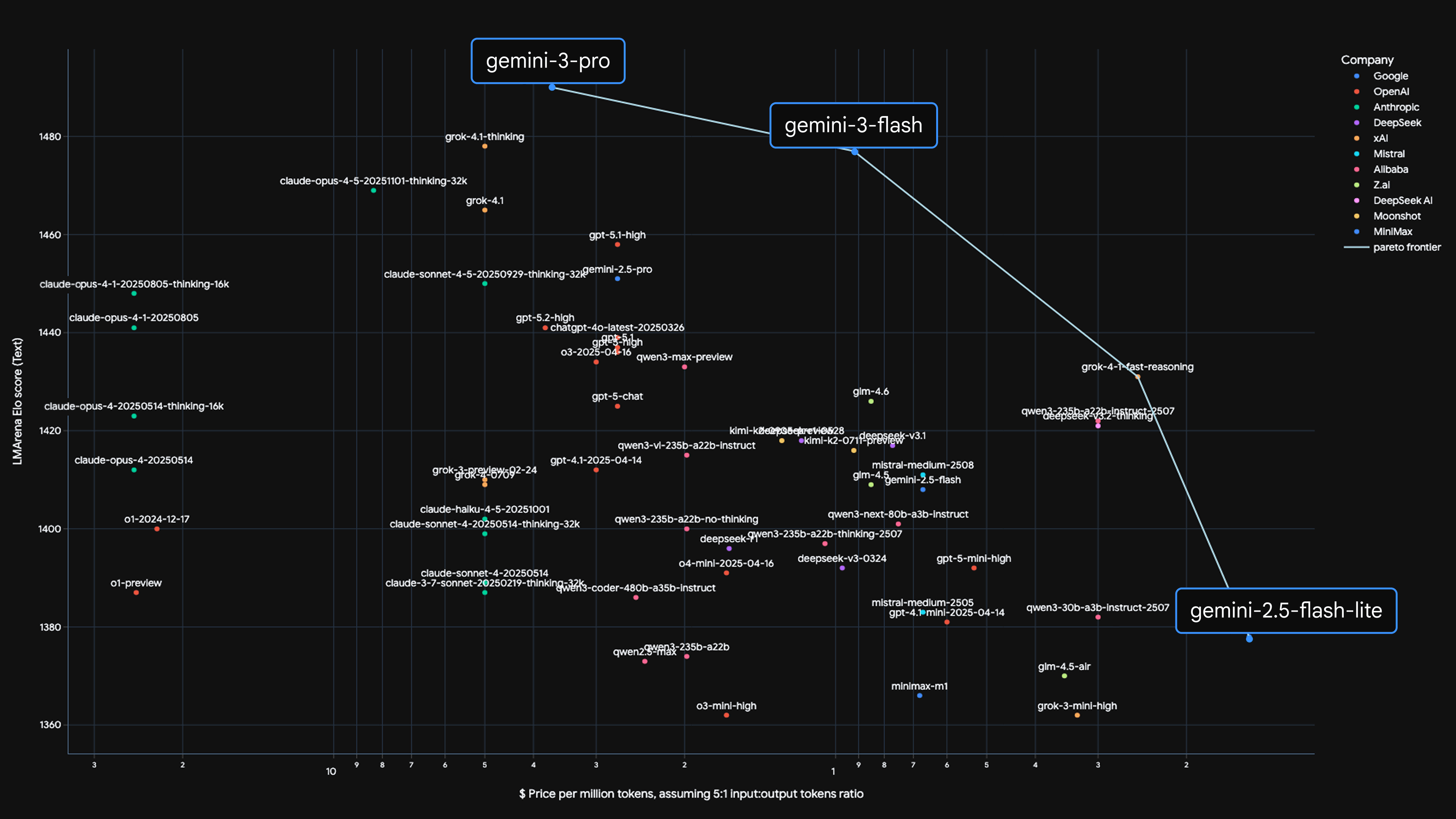
The post also cites third-party benchmarking to underscore throughput/latency advantages and claims the model can outperform older versions even at lower “thinking” settings, supporting use cases where speed matters as much as accuracy.
Pricing and cost levers
Google lists Gemini 3 Flash pricing in the Gemini API and Vertex AI, and calls out cost-reduction mechanisms such as context caching and batch processing for workloads with repeated tokens or asynchronous throughput requirements.
- Pricing (as stated): $0.50 / 1M input tokens and $3 / 1M output tokens; audio input noted separately.
- Context caching: positioned as enabling significant reductions when prompts reuse tokens at scale.
- Batch API: highlighted for additional cost savings and higher rate limits for async processing.
Example use cases highlighted
Coding and agentic development
The source post emphasizes iterative, agentic coding workflows and positions Gemini 3 Flash as fast enough to “keep pace” during development, including integration with Google’s agentic development surface referenced in the article.
Gaming and multimodal reasoning
The announcement points to gaming-related workflows where near real-time reasoning and video understanding can accelerate creation tools and enhance player experiences via smarter characters and world generation.
Deepfake detection and forensic analysis
The post also references near real-time multimodal analysis for deepfake detection, where complex forensic outputs can be translated into clear, actionable explanations.
Document analysis
Finally, the article calls out document analysis—where accuracy requirements are high—as an area where Gemini 3 Flash is positioned to reduce latency without compromising reasoning capability.
Where you can access Gemini 3 Flash
Google states Gemini 3 Flash is rolling out to developers via the Gemini API and multiple developer surfaces, including Google AI Studio and enterprise access via Vertex AI, among others.
- Google AI Studio + Gemini API
- Google Antigravity (as referenced in the post)
- Gemini CLI
- Android Studio
- Vertex AI
Attribution
This post is an independent summary and commentary based on Google’s original announcement. All images above are embedded from the source and credited to Google. For full details, see the original: Build with Gemini 3 Flash.